


Riverlife’s Shore Thing, a floating public space on Pittsburgh’s North Shore, has been named one of nine winners of the 2026 ULI Americas Awards for Excellence. Supporting its waterfront activities is a solar-powered, off-grid energy system designed by Pittsburgh-based ZeroFossil, with LiTime LiFePO₄ batteries providing energy storage.
The project brings together public space, renewable energy and community life. Rooftop solar panels generate electricity during the day, while the battery bank stores energy for later use—helping power a place where residents and visitors can gather, enjoy activities and experience Pittsburgh’s rivers.
An Award-Winning Place to Gather on the Water
Anchored near Allegheny Landing, Shore Thing consists of ten interconnected barges covering approximately 4,800 square feet. Riverlife, the nonprofit behind the project, created the platform as a free-to-enjoy space connecting people with the waterfront through art, play and community programming.
According to Riverlife’s award announcement, Shore Thing welcomed more than 50,000 visitors during its inaugural 2025 season and offered more than 70 free programs in its 2026 season.

The Urban Land Institute’s award recognizes Shore Thing as an overall public-space project. Its solar-powered energy system is one part of a broader effort to create an inviting, environmentally conscious waterfront destination.
For visitors, that vision takes a practical form: a place to spend time by the river, participate in public activities and connect with the city’s waterfront. The project’s recognition gives the community another reason to celebrate a space built for shared experiences.
How LiTime Batteries Help Power Shore Thing?
Creating a gathering place on the water also means finding a practical way to power it. Lighting, equipment and public activities need electricity beyond the hours when solar panels generate power.
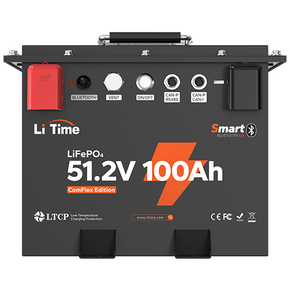
ZeroFossil designed a custom off-grid system housed in a repurposed shipping container. Twenty rooftop bifacial solar panels capture direct sunlight and reflected light, while ten LiTime 51.2V 100Ah LiFePO₄ batteries store the energy they generate.

Each battery provides 5.12kWh of nominal storage, giving the installation a total nominal storage capacity of 51.2kWh. Victron equipment converts stored battery power into standard AC electricity for use on the platform.
The LiTime 48V 100Ah Smart ComFlex battery has a nominal voltage of 51.2V and provides 5.12kWh of nominal energy storage per unit. Its features include Bluetooth monitoring and CAN/RS485 communication for integration with compatible equipment, including Victron systems.
| System Component | Project Configuration | Role in the System |
|---|---|---|
| Solar Panels | 20 rooftop bifacial solar panels | Capture direct sunlight and reflected light |
| Battery Bank | 10 LiTime 51.2V 100Ah LiFePO₄ batteries | Store the energy generated by the solar panels |
| Energy per Battery | 5.12kWh of nominal storage | Provides stored energy for later use |
| Total Battery Storage | 51.2kWh nominal capacity | Supports the platform’s electricity needs beyond solar generation hours |
| Power Conversion | Victron equipment | Converts stored battery power into standard AC electricity |
| System Monitoring and Communication | Bluetooth monitoring and CAN/RS485 communication | Supports integration with compatible equipment, including Victron systems |
Together, solar generation and battery storage help match available sunlight with the platform’s electricity needs. A backup generator remains on standby, while the project aims to operate without fossil fuels as much as possible.
Stored Sunshine, Shared Experiences
For people visiting Shore Thing, the energy system largely stays behind the scenes. Its purpose is to support what happens above deck: public activities, time outdoors and opportunities to enjoy the river.
Battery storage connects solar generation with those everyday needs. Energy collected during daylight hours can be stored for evening lighting and equipment, extending the usefulness of the rooftop solar array.
This approach also supports Riverlife’s intention to create a quiet, welcoming space. Solar energy and stored electricity help reduce reliance on fuel-powered generation, keeping attention on the waterfront experience.
The ZeroFossil Engineering Team described LiTime’s contribution:
“Your batteries helped power this award-winning project, enabling tens of thousands of Pittsburgh residents and visitors to enjoy a solar-powered floating platform.”

The collaboration gives energy storage a human context. Behind the system specifications is a public space that has welcomed thousands of people—a real application where stored solar energy helps support community life.
Powering Life Beyond the Grid
At Shore Thing, stored solar energy helps turn a floating platform into a place for people to come together. The setting is distinctive, but the need behind it is familiar: power that supports life wherever it happens.
That connection extends to travelers exploring in an RV or camper, boaters spending time on the water, and people using solar energy storage for off-grid living. Each setting has different power requirements, yet all share a practical goal—making electricity available where it is needed.
Through its collaboration with ZeroFossil, LiTime has helped bring that purpose to Pittsburgh’s waterfront. Shore Thing gives it a community dimension: energy collected from the sun, stored for later use, and put to work supporting a space people can share.
For LiTime, it is a meaningful example of how dependable energy storage can support more ways to connect with the outdoors—and with one another.
Explore LiTime for your next adventure or solar storage setup. Visit LiTime Solutions for business partnerships and project applications.

