


Adding an electric motor to a kayak reduces paddling effort and makes fishing or longer trips more manageable. The right electric outboard motor for a kayak should match the kayak’s mounting structure, loaded weight, steering system, operating conditions, and battery requirements. Before buying, confirm compatibility first—then compare power, range, controls, total system weight, and safety features.
- 1. Which Type of Kayak Electric Motor Should You Choose?
-
2. Will the Motor Fit Your Kayak?
-
3. How Will You Steer and Control the Kayak?
-
4. What Size Electric Motor Does Your Kayak Need?
-
5. What Electric Motor Battery Should You Choose?
- 6. What Other Features Should You Check Before Buying?
-
7. FAQs About Electric Kayak Motors
Which Type of Kayak Electric Motor Should You Choose?
The right motor type depends mainly on your kayak’s mounting structure, desired steering method, required power, and portability needs.
| Motor type | Common mounting position | Main advantage | Best suited for |
|---|---|---|---|
| Trolling motor | Stern, side, or bow | Affordable low-speed propulsion | Fishing and calm-water cruising |
| Electric outboard motor | Transom or stern motor mount | Integrated propulsion and steering | Larger, motor-ready kayaks |
| Pod or jet motor | Rudder, fin box, or hull mount | Compact and low-profile | Compatible kayaks and paddle assist |
| Integrated drive motor | Pedal-drive opening or dedicated mount | Clean installation | Kayaks designed for a specific system |
A trolling motor is generally optimized for controlled, low-speed movement. An electric outboard motor normally provides a more complete propulsion system, while pod and fin motors prioritize compact size and simple transport. Explore LiTime guide on Outboard Motor VS Trolling Motor.
Will the Motor Fit Your Kayak?
A motor fits only when the kayak has a suitable mounting point, adequate load capacity, and enough clearance for the shaft and propeller. A kayak’s size alone does not confirm motor compatibility.
Kayak Type and Motor Compatibility
Motor-ready fishing kayaks often have a reinforced stern, accessory rails, or a dedicated motor mounting plate. These designs usually provide the simplest path to motorization.
Other kayak types require closer inspection:
- Sit-on-top kayaks: May accept stern, side, or rudder-mounted systems.
- Inflatable kayaks: Usually require a manufacturer-approved transom or adapter.
- Pedal kayaks: May support a motor through the drive opening or stern.
- Recreational and touring kayaks: Often lack reinforced mounting points and may not be suitable for modification.

Check the kayak manufacturer’s capacity plate, manual, and motor-mount guidance before drilling holes or adding an aftermarket bracket.
Common Mounting Options
A transom mount clamps or bolts onto a reinforced surface at the stern. It is commonly used with trolling motors and electric outboards, but the transom must tolerate both the motor’s weight and operating thrust.
Rudder mounts replace or work with an existing rudder assembly. Fin box mounts offer quick installation, although a fixed motor may require the paddle or a separate rudder for steering.
Weight Capacity and Balance
Calculate the complete operating load:
Total load = paddler(s) + gear + motor + battery + mount and cables
Remaining below the stated capacity does not automatically guarantee good handling. A heavy motor and battery placed at the stern can lower the rear of the kayak, reduce freeboard, and change steering response.
How Will You Steer and Control the Kayak?
Choose the steering system before buying the motor because steering depends heavily on the mounting position. A powerful motor with inconvenient controls can be harder to use than a smaller, well-integrated system.
Tiller Steering
A tiller handle lets the operator rotate and control the motor directly. It is simple and familiar, but reaching behind the seat can be uncomfortable on a kayak.
Foot Steering
Foot pedals connect to a rudder or steerable motor mount. This keeps both hands available for fishing, although it requires compatible pedals, cables, and enough room for installation.
Paddle or Rudder Steering
A fixed fin or pod motor only produces forward and reverse thrust. The paddler then steers with a paddle or an existing rudder, making this setup better for assistance than precise powered maneuvering.
Wireless Remote Steering
A wireless remote system controls speed and direction without requiring the user to sit beside the motor. Look for forward and reverse operation, variable speed, an emergency stop, water resistance, and a manual backup control.

The Argoseeker electric outboard motors combine wireless remote operation with powered steering. This arrangement may suit users who want to control the motor from a more natural seating position.
What Size Electric Motor Does Your Kayak Need?
Motor size should be based on loaded weight, intended use, water conditions, and kayak construction. More thrust or wattage does not automatically produce a proportionate increase in speed.
Start With Loaded Weight and Use
A lightly loaded kayak used on a calm lake needs less power than a tandem fishing kayak carrying batteries, tackle, and camping gear. Wind, current, and longer travel distances may justify additional power reserve.
Consider how the kayak will be used:
| Use | Main sizing priority |
|---|---|
| Casual paddle assistance | Low weight and efficiency |
| Fishing at low speed | Precise control and quiet operation |
| Longer cruising | Efficient power and sufficient battery capacity |
| Heavy or tandem kayak | Greater thrust and mounting strength |
| Wind or current | Additional power reserve |
| Shallow, weedy water | Adjustable depth and propeller protection |
Understand Thrust, Watts, and Horsepower
Thrust measures force, while watts and horsepower measure power. They describe different aspects of performance and should not be treated as directly interchangeable ratings.
For example, 700W converts mathematically to approximately 0.94 hp, but that calculation alone does not predict kayak speed. Propeller design, hull resistance, total load, water conditions, and motor efficiency all affect real-world performance.
Do Not Oversize the Motor
An oversized motor can require a heavier battery, stronger mounting hardware, and more onboard space. It may also exceed the kayak manufacturer’s motor or horsepower limit.
The LiTime Argoseeker offers lightweight electric outboard options—13.5 lbs portable outboard A1 and 16.5lbs A2—making it easier to carry, install, and remove from a compatible motor-ready kayak. However, motor weight is only one part of the setup. Compare the entire system rather than the motor alone. Include the battery, cables, controls, mount, and any steering hardware in the final weight.
Check Shaft Length and Propeller Clearance
Measure from the mounting surface to the waterline and follow the motor manufacturer’s required immersion depth. The propeller must remain underwater without sitting unnecessarily deep.
Also confirm that the propeller clears the hull, rudder, and other hardware. Tilt or height adjustment is valuable when launching, entering shallow water, or passing over submerged obstacles.
→ See the LiTime full guide on how to know what size electric outboard motor you need.
What Electric Motor Battery Should You Choose?
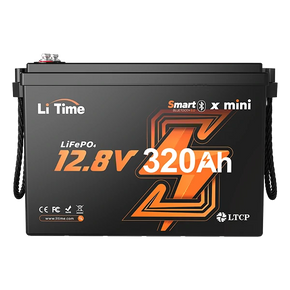
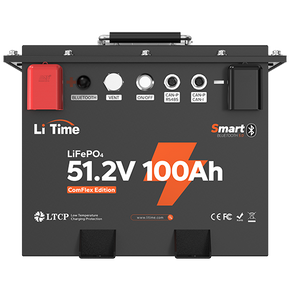
The battery must match the motor’s voltage and continuous current requirements. Capacity then determines potential runtime, while battery weight and dimensions affect the kayak’s balance.
Match Battery Voltage and Output
Use the voltage specified by the motor manufacturer:
- 12V motor: compatible 12V battery system
- 24V motor: compatible 24V battery system
- 36V motor: compatible 36V battery system
- 48V motor: compatible 48V battery system
For lithium batteries, verify that the battery management system’s continuous discharge rating meets or exceeds the motor’s maximum continuous current. Correct cable gauge, connectors, circuit protection, and polarity are also essential.
Estimate Battery Capacity and Runtime
Battery energy can be estimated with:
Battery energy (Wh) = Nominal voltage (V) × Capacity (Ah)
Approximate runtime can then be calculated as:
Runtime (hours) ≈ Usable battery energy (Wh) ÷ Average motor draw (W)
A 24V-class 50Ah battery stores roughly 1,280Wh when its nominal voltage is 25.6V. Runtime cannot be determined from this figure alone because the motor rarely draws the same power at every speed.
Full-throttle operation generally drains the battery much faster than moderate cruising. Treat published runtime as a reference unless the test conditions, kayak load, speed, and battery are clearly stated.
Consider Battery Placement and Charging
Secure the battery in a dry location where it cannot slide or affect the kayak’s stability. Waterproof protection for terminals and connections remains necessary even when the battery itself has a water-resistant enclosure.
Also compare charging time, charger availability, battery monitoring, and whether a spare battery can be carried safely. More capacity extends potential range but adds weight and occupies additional space.
What Other Features Should You Check Before Buying?
The best motor is not simply the most powerful one. It should be practical to install, control, transport, and maintain in the conditions where you actually kayak.
Check the following before purchasing:
- Variable speed: Provides finer control and can improve efficiency.
- Forward and reverse: Makes launching, docking, and positioning easier.
- Emergency stop: Stops propulsion if the operator loses control.
- Waterproof ratings: Check the motor, above-water controls, and remote separately.
- Saltwater suitability: Requires corrosion-resistant components and proper cleaning.
- Tilt and height adjustment: Helps in shallow water and during transport.
- Propeller protection: Reduces direct contact with obstacles but does not remove all risk.
- Weed management: Important for fishing in areas with dense vegetation.
- Quick removal: Makes storage, charging, and transport easier.
- Display or battery indicator: Helps users monitor operating status.
- Warranty and parts: Confirm coverage and access to replacement propellers, remotes, and mounts.
You should also check local rules before launching. Adding a motor may change the kayak’s legal classification and could introduce registration, safety-equipment, or operating requirements.
FAQs About Electric Kayak Motors
1. Why Add an Electric Motor to Your Kayak?
An electric kayak motor reduces paddling effort and helps users travel farther, maintain low-speed control, or return against light wind and current. It also provides quiet propulsion without onboard fuel or direct exhaust emissions.
2. How Do You Add a Motor to a Kayak?
Confirm that the kayak can safely support a motor, then choose a compatible transom, rudder, side, fin box, or dedicated mount. Install the correctly rated battery and wiring, secure all components, and test steering and balance at low speed before regular use.
3. How Do You Motorize a Kayak?
A complete motorized kayak setup normally includes a compatible motor, mount, battery, cables, circuit protection, controls, and safety equipment. The motor voltage, mounting structure, shaft depth, total weight, and steering method must work together.
4. Can You Put an Electric Motor on Any Kayak?
No. Some kayaks lack the reinforced mounting points, stability, load capacity, or manufacturer approval needed for safe motor use. Motor-ready fishing kayaks are usually easier to equip.
5. How Fast Can an Electric Kayak Motor Go?
Speed depends on motor output, kayak shape, total load, propeller, wind, and current. Published speed figures should be treated as estimates unless the test conditions closely match your setup.
6. Is a Trolling Motor or Electric Outboard Better for a Kayak?
A trolling motor is often suitable for affordable, low-speed fishing and short trips. An electric outboard offers more integrated propulsion and steering but requires a compatible mounting structure and sufficient load capacity.

