


I Built the System Around What My House Actually Needs
Hi, my name is Eric. When I built this system, I was very clear about what I needed it to do. I needed it to run the loads in my house — my lights, my window AC units, my ceiling fans, my refrigerator, my deep freezer, my microwave, my mini fridge, my computer console, my gaming console, my televisions. It sounds like a lot, and it is a lot, but this system actually handles it.
That is the biggest advice I would give anyone thinking about building a system like this: take your time, figure out your needs, and build your system around what you actually want it to do.

LiTime Became the Foundation of My Battery Bank
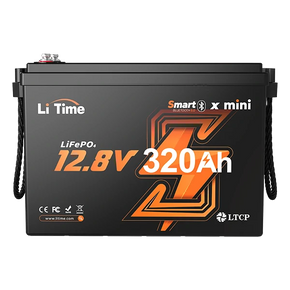
My system is a 12V setup, and I ran my LiTime 12V 200Ah lithium batteries in parallel because I wanted to increase my amp-hour capacity. By wiring the batteries that way, I built out a 12V 800Ah battery bank, which gave me the stored energy I needed for the kind of household loads I was planning to run.

To organize everything properly, I used positive and negative bus bars. My battery negatives go to the negative bus bar, and my positives go to the positive bus bar. For me, that makes the system cleaner and helps distribute power more evenly instead of stacking cables directly on top of each other on the battery terminals. It also makes it easier to run the main lines out to the charge controllers and inverter charger.

LiTime Works as Part of a Complete Solar Charging System
I also built the charging side of the system to match the size of the battery bank. I used three separate MPPT charge controllers: one 100A MPPT connected to 13 bifacial 100W solar panels, and two additional 40A MPPT controllers connected to separate solar arrays. At the time of the walkthrough, one array was producing about 41.5 amps, another about 32.1 amps, and a smaller three-panel string was bringing in about 11.8 amps. Together, those solar inputs were giving me enough charging power to keep the battery bank topped off.
That is one of the reasons I have been so happy with this LiTime setup. It integrates cleanly into the rest of the system and works well alongside the solar charge controllers and inverter charger.

LiTime Supports the Way I Actually Live
To run the AC side of the system, I paired everything with a 3000W pure sine wave inverter charger, and that has been enough to power the household equipment I needed — my window AC units, ceiling fans, dehumidifier, televisions, camera systems, refrigerator, deep freezer, and mini fridge.
I also like having the remote control interface, because I can turn the system on and off, see the incoming voltage, and check the status of the battery. If I want to go back on the grid and fast charge the batteries, I can do that. If I want to switch back and run off solar, I can do that too. That makes the whole system much easier to manage day to day.

What I Like Most About LiTime
For me, LiTime has been an awesome purchase. The products are well built, they communicate with the rest of the system just fine, and I have not had any problems with this setup since I installed it. It has been easy to work with, easy to put together, and easy to use.
And that is what makes this more than just a DIY project. LiTime did not just give me battery capacity — it helped me build a home energy system that actually works the way I need it to work.

